-
History
Like many cultures based in warm climates, Filipino natives developed various methods of preserving food. Adobo utilizes the acid in the vinegar and the high salt content of soy sauce to produce an undesirable environment for bacteria. Its delicious flavor and preserving qualities served to increase adobo's popularity. The adobo was traditionally cooked in clay pots but today is made in more common metal pots or woks.
When the Spanish invaded and settled in the Philippines during the 16th century, they witnessed this traditional Filipino cooking method and called it adobo, which is the Spanish word for marinade. -
Ingredients
* 2 lbs Pork Belly
* 2 tablespoons Garlic
* 5 Dried Bay Leaves
* 1/2 cup Soy Sauce
* 4 tablespoons Vinegar
* 1 tablespoon Peppercorn
* 2 cups Water
* Salt to Taste
-
Cooking Procedure
Step 1: Combine the pork belly, soy sauce, and garlic then marinade for at least 1 hour.
Step 2: Heat the pot and put-in the marinated pork belly then cook for a few minutes.
Step 3: Pour remaining marinade including garlic.
Step 4: Add water, whole pepper corn, and dried bay leaves then bring to a boil. Simmer for 40 minutes to 1 hour.
Step 5: Put-in the vinegar and simmer for 12 to 15 minutes
Step 6: Add salt to taste
Step 7: Serve hot. Share and enjoy!
-
Cooking Reminder
Pork belly is the most common cut of pork to use for adobo, but you can also use other cuts as long as it has some fat content. Fat makes the meat moist. I suggest using pork shoulder as an alternative cut.
Filipino adobo won’t be the same without garlic. The more garlic I use, the better my adobo is (in my opinion). Crush the garlic using a mortar and pestle tool or the side of your knife before cooking. This ensures that the flavors are quickly extracted from it.
Bay leaves or Laurel leaves is a must for this recipe. Dried bay leaves are the most commonly used due to its availability. Fresh bay leaves is good too.
Use white vinegar. If this is not available, either cane or rice vinegar can be used as substitutes.
I use Filipino brand soy sauce all the time. In my opinion, using other kinds of soy sauce affects the authentic flavor of the dish.
Whole peppercorns are ideal. However, you can use cracked pepper or ground pepper for this recipe.
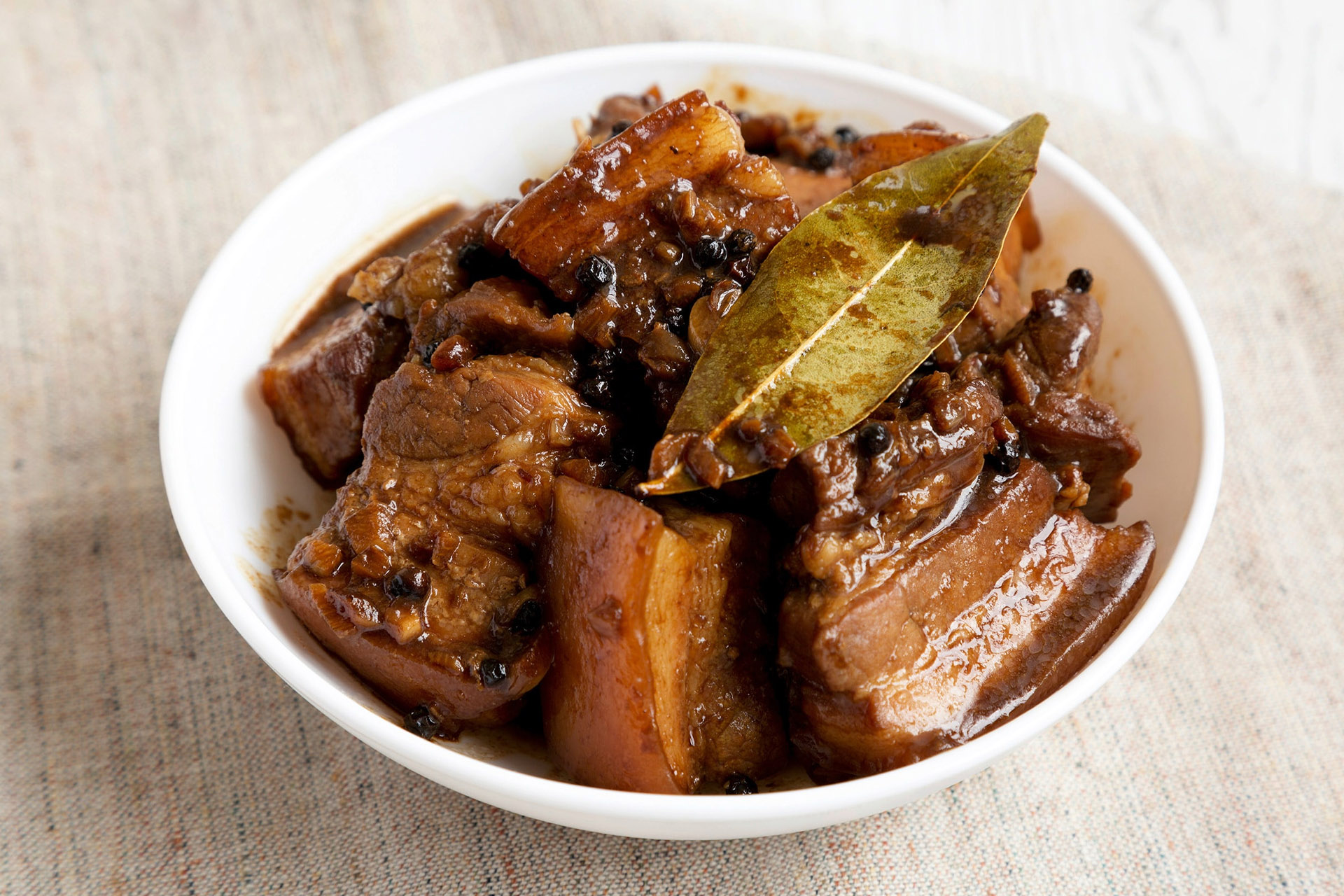
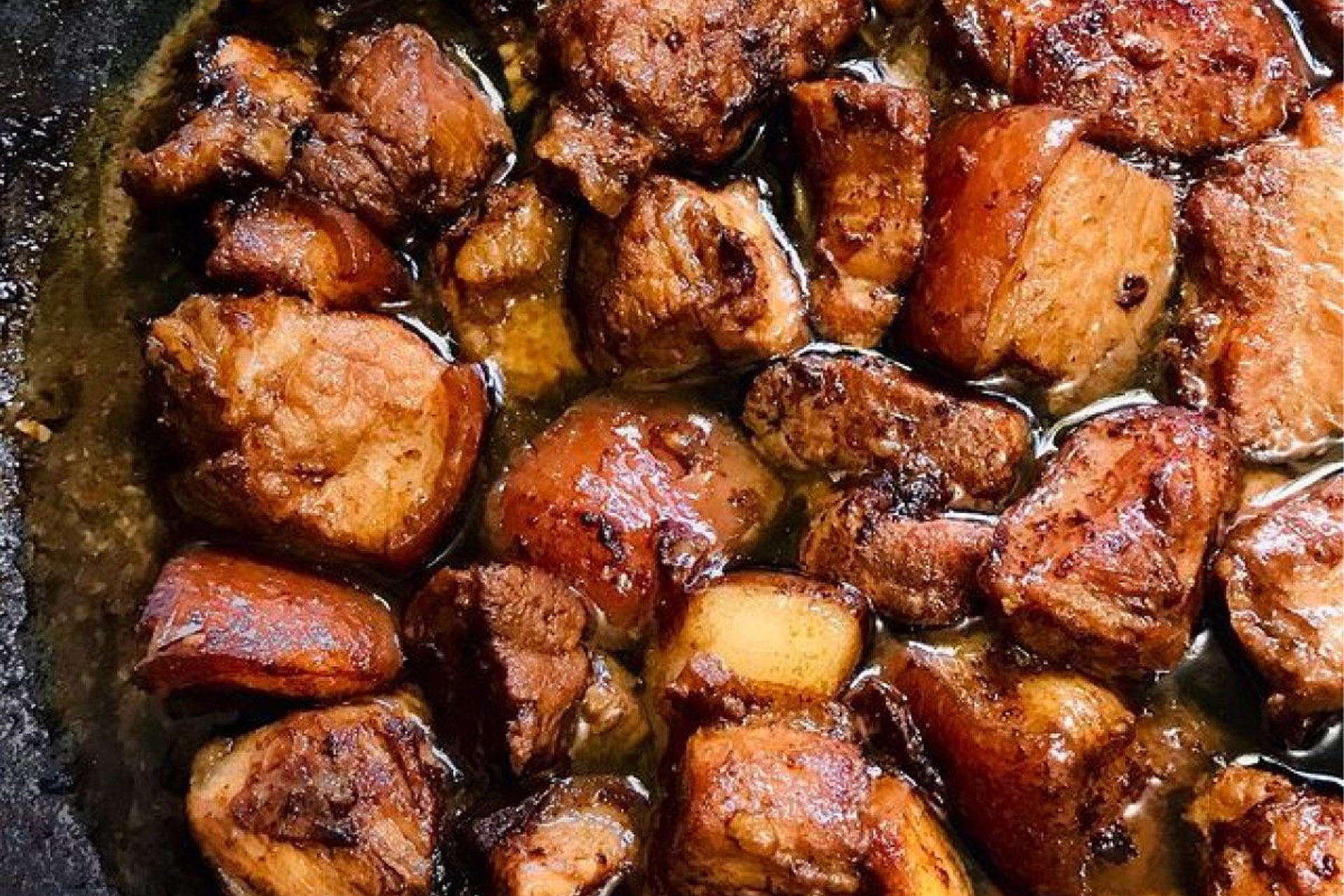
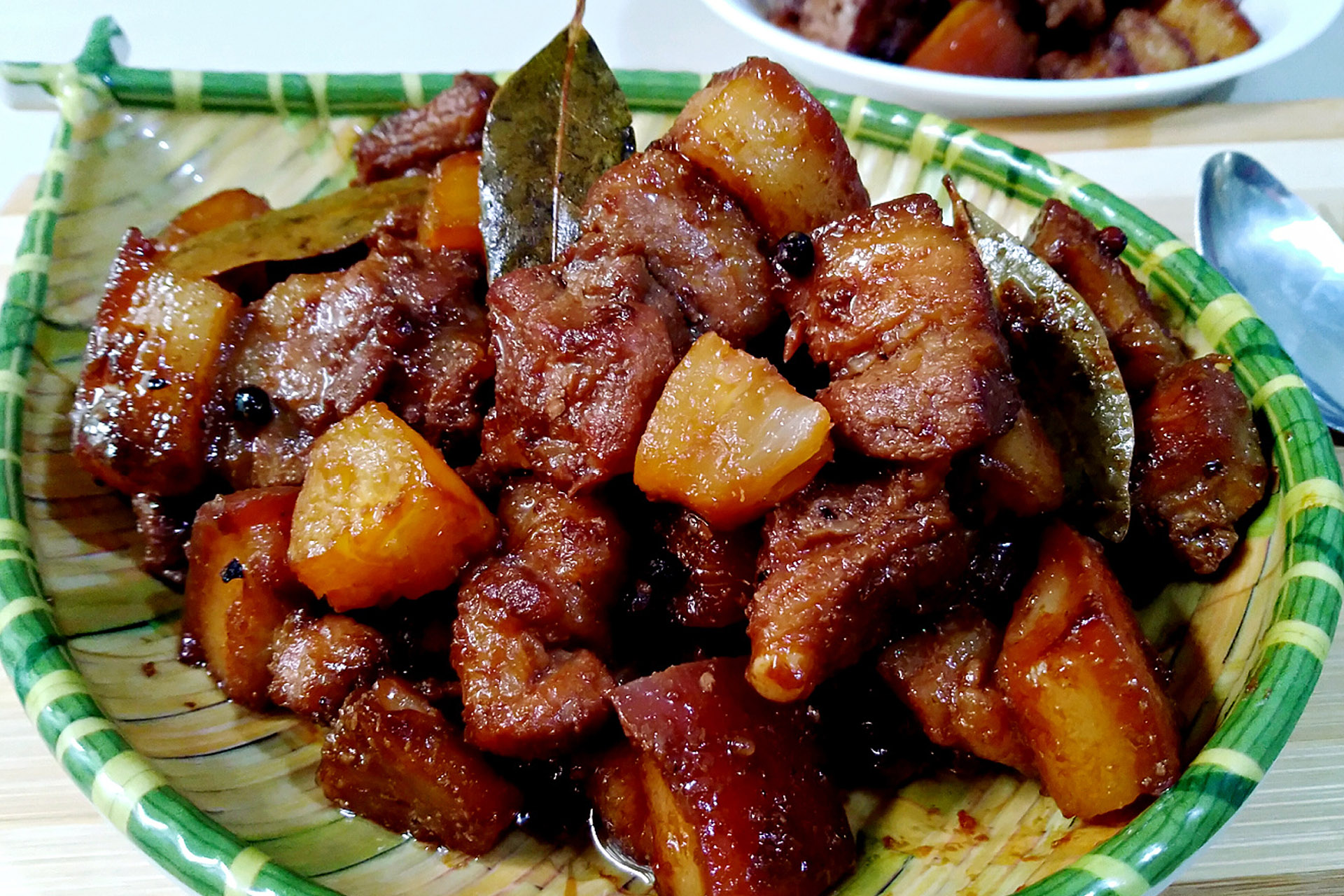
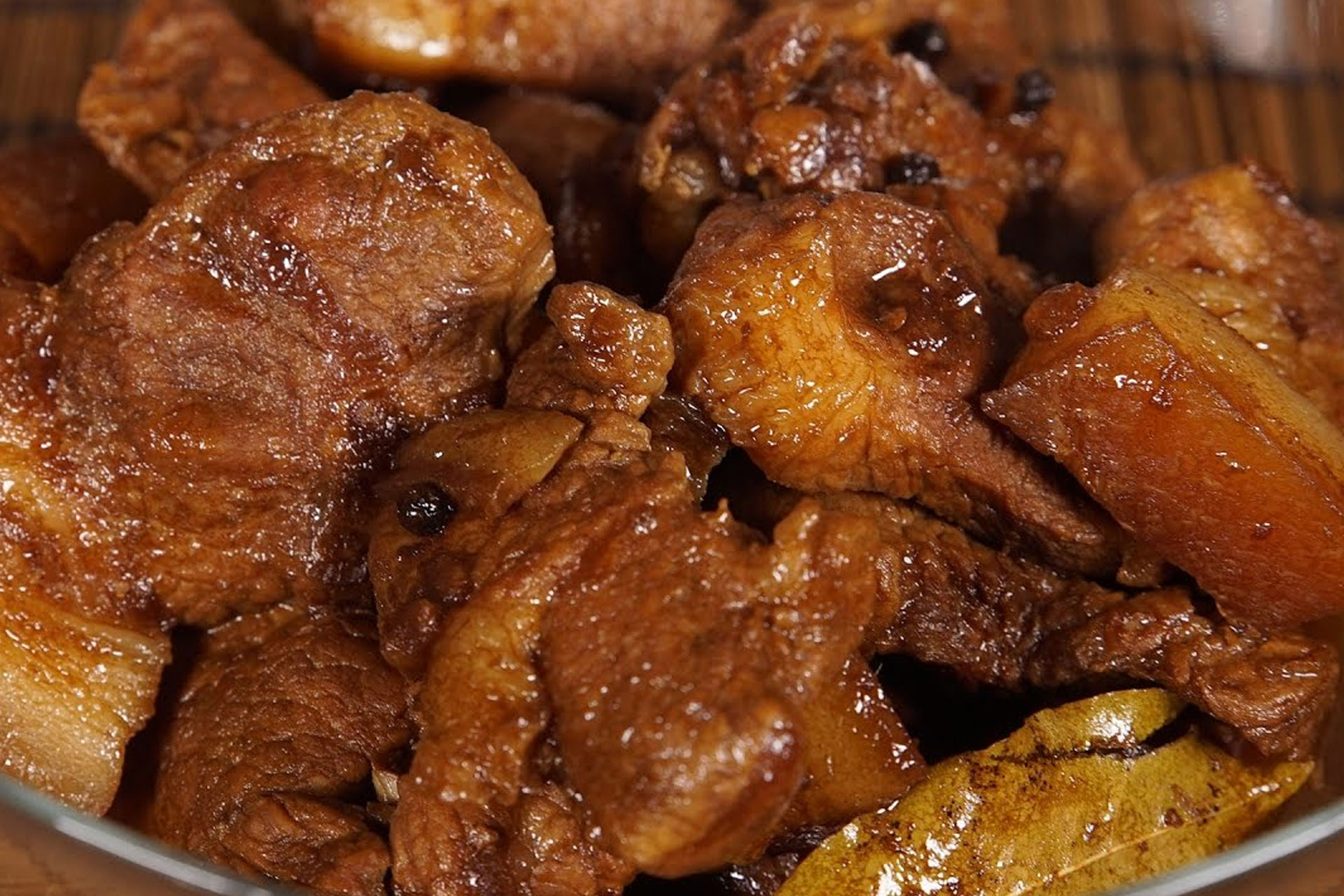
Pork Adobo
Related Products
Chipotle Buffalo Wings
Php 395.00
Php 470.00
Beef Taquitos
Php 195.00
Php 230.00
Chicharron con Salsa
Php 260.00
Php 330.00
Mexican Pork Sisig
Php 490.00
Php 520.00